

Non-Jewish Melbourne barrister Philip Crutchfield KC has urged the Royal Commission on Antisemitism and Social Cohesion to confront what he says are institutional failures allowing antisemitism to spread through universities, the arts, cultural bodies, social media and the national broadcaster.
In a detailed submission, Crutchfield calls for a national education program on conformity bias, structured dialogue between Jewish and non-Jewish Australians, stronger action against social media companies, an independent ombudsman for arts funding complaints and a direct warning to the ABC to observe its mandate.
Crutchfield, chair of both the Heide Museum of Modern Art and Bell Shakespeare, says he felt compelled to speak out “out of a sense of duty to enhance the rule of law when it is being challenged”.
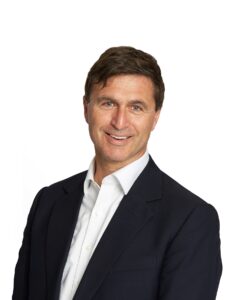
He says his concern is not about choosing sides in a foreign conflict, but about the kind of country Australia is becoming.
“My concerns would be the same if any other religious or ethnic group in Australia were having to send their children to school under armed guard or were being blatantly discriminated against,” he writes.
Crutchfield says it is “upsetting and intolerable” that Jewish children can attend school and synagogue only under armed guard.
Rather than compiling another list of antisemitic incidents, he urges the commission to examine the social forces that have allowed antisemitism to spread.
His central argument is that antisemitism is being protected by what he calls “the power of the herd”, a dynamic in which people stay silent, even when they privately disagree, because the cost of dissent has become too high.
“The herd today demands not merely agreement, but the severing of relations with those who will not agree. The price of dissent is no longer awkwardness; it is exile,” he writes.
Crutchfield argues that hostility to Zionism has become a test of belonging in many progressive circles and that the label “Zionist” is being used to sort Jews into a category that allows old antisemitic ideas to travel in more acceptable language.
He says criticism of the Israeli government, however harsh, is not antisemitism.
“The problem is not criticism of a government. The problem is the deployment of ‘Zionist’ as a category into which Jews are sorted,” he writes.
He says the common claim that antizionism cannot be antisemitic because not all Jews are Zionists and not all Zionists are Jews is, in practice, often used to avoid the real issue.
He also rejects claims that those who raise antisemitism are “weaponising” it, saying the framing turns the act of objecting into the alleged offence.
A significant part of the submission draws on the Sir Zelman Cowen Annual Lecture delivered by High Court Justice Jayne Jagot at the University of Melbourne on October 5, 2023, two days before the Hamas attacks on Israel.
Crutchfield describes her remarks as “terrifyingly prescient”.
Justice Jagot argued that antisemitism is not merely prejudice but “a conspiracy theory about how the world operates”, one that treats Jews as a hidden power behind politics, finance, media and international affairs.
Crutchfield says that thinking has reappeared through claims about Jewish or Zionist control, including in universities, the arts and media.
On universities, Crutchfield says Melbourne University students were intimidated during 2024 pro-Palestinian protests.
He describes masked protesters in face-covering keffiyehs entering the office of a Jewish professor who wore a kippah, placing signs and stickers over his office and chanting offensive slogans because of his research links with the Hebrew University of Jerusalem.
“As a student of history, I sensed with trepidation 1933 Germany,” he writes.
He says universities have too often allowed protesters to interrupt classes, cancelled Israeli speakers rather than protecting their right to speak, and responded weakly to antisemitism complaints.
In the arts, Crutchfield says a small, organised group of artists, critics, administrators, curators and festival figures has been able to impose its views on many others.
He criticises performers who use the stage for political statements unrelated to the work being presented, telling the commission the issue is “a question of forum, and basic civility”.
He also rejects suggestions that Jewish donors control the arts or dictate what artists may say, calling the claim “baseless and ugly”, and a modern version of the old slander of secret Jewish power over money and culture.
He says Jewish creatives have been pushed out or made to feel unwelcome and that writers’ festivals have become alienating spaces rather than places for open exchange.
On the ABC, Crutchfield says he complained earlier this year about a report that he believed wrongly suggested the United States had been manipulated by Israel in its Iran policy.
Even if unintentional, he says, such framing revives “one of the oldest lies in the antisemitic canon”, the idea of Jews as hidden manipulators of great powers.
He also criticises political symbols being worn by staff inside ABC premises, saying the accumulation of such signals tells those outside the favoured view that they are no longer accepted.
“The ABC is not only meant to be neutral and respect the difference between facts and opinion. That is not its option; it is mandated thus,” he writes.
Crutchfield’s recommendations are extensive.
He urges the commission to give weight to material from the arts, cultural and broadcasting sectors, particularly where it shows the social cost of dissent and the position of Jewish Australians inside those institutions.
He calls for a national public education initiative on conformity bias, availability heuristics and the “spiral of silence”, particularly in secondary schools and universities.
The aim, he says, should be to give young Australians the tools to recognise when they are being carried along by a group rather than making independent judgments.
Crutchfield also recommends structured dialogue programs that bring Jewish and non-Jewish Australians together, arguing that it is easier to distrust or hate a category than a person.
He says schools and universities should foster awareness of the right of Jews and Palestinians to peaceful coexistence.
He urges the commission to consider banning political identifiers in some workplaces.
He also calls for an examination of the reduced participation of openly Jewish Australians in cultural life, including in leadership roles at major arts organisations.
Crutchfield says the commission should examine whether cultural institutions and funding bodies have adequate complaint and safety processes, particularly when abuse is framed as hostility to “Zionists” and treated as falling outside protections against antisemitism.
He recommends a private right of action against social media companies, through a no-cost complaints process, for people harmed by hateful posts that breach any future duty of care imposed on platforms.
He says the system should include mechanisms that make it economically unattractive for platforms to allow hateful and offensive material to remain online.
Crutchfield also calls for the commission to “call out the ABC” and tell it to observe its mandate.
He further recommends an independent ombudsman to investigate unfair treatment in public arts funding, including the disproportionate exclusion of Jewish creatives, while being available to all.
The submission comes as the Royal Commission prepares to begin its third hearing block in Sydney on Monday.
The block will focus on antisemitic content and other hateful speech online, as well as antisemitism in traditional media and broadcasting.
The first day’s witnesses include Arsen Ostrovsky, Ben Cohen, Steven Lowy AM, Dr Lee Kofman as well as two anonymous individuals. All are listed as giving lived experience evidence.
Ostrovsky is a human rights lawyer and pro-Israel advocate who has served as chief executive of the International Legal Forum. He was also injured in the Bondi Beach terror attack.
Cohen is a senior analyst with the Foundation for Defense of Democracies, specialising in global antisemitism, antizionism and Middle East affairs. He is also a journalist with long experience covering antisemitism and Jewish affairs.
Lowy is a businessman, philanthropist and Jewish community leader.
Kofman is a Russian-born Israeli-Australian author, editor, writing teacher and mentor based in Melbourne.
Crutchfield ends his submission by saying he believes most Australians abhor what Jewish people have endured.
“To paraphrase Edmund Burke, there are a lot more quiet cows in the field than noisy grasshoppers,” he writes.
He says he wrote the submission with the words of Martin Niemoller in mind, warning that the cost of silence can become the very thing decent people later regret.