

Four inseparable friends and the enduring legacy of Bondi

Marika Pogany went down to Bondi Beach with three close friends for a celebration on an idyllic Sydney summer afternoon. They were all in their 80s, and they had enjoyed this kind of outing for years. They talked about the chaos of Bondi traffic while settling into their white plastic chairs to enjoy the Chanukah by the Beach gathering.
After a while, one of the friends, Nelly, decided she would move the car so the others would not have far to walk back. Mary went with her for company, leaving Marika sitting with Agi.

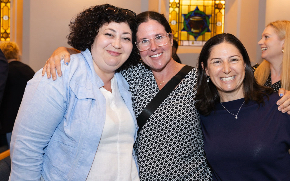
Mary, Nelly, Agi, and Marika at the Chanukah by the Beach celebration (supplied)
When the shooting began, Agi and Marika heard screams to get down. Agi managed to get her head under a chair, but Marika did not.
Minutes later, she would become one of the 15 victims of the shooters at Bondi Beach.
Four women went to the beach, but only three came home.
That is the devastating arithmetic at the heart of ABC TV’s new Compass special, “Bondi Spirit”. However, the programme is not structured around the violence; it is structured around friendship, memory, and the long Jewish history of Bondi that framed these women’s lives.
Producer Tracey Spring said the approach was deliberate.
“We made the decision that there is no politics in this story, and there are no images of the shooters,” Spring said. “It is just going to be the personal story of what happened on that day and then the aftermath with the women.”
Spring was asked to make the film by the daughter of one of Marika’s friends.
“She said she did not trust anyone else with these women’s story, and she wanted me to do it,” Spring explained.
These four women were the closest of friends, talking several times a day and meeting each week. They did crafts together, they travelled together, and they finished each other’s sentences. Their husbands, as one of them jokes in the film, have “fallen into the background”.
Within days of the attack, Spring was in Bondi sitting with women who were still in shock. Part of her pitch was to widen the lens beyond the attack itself.
“I wanted it to be a love letter to Jewish Bondi,” she said. “I wanted it to be healing.”
The episode weaves Marika’s story through the suburb’s Jewish evolution. Journalist Michael Visontay provides “a link and a thread”, included for his knowledge of the Jewish history of Bondi and its important role in Sydney Jewish life.

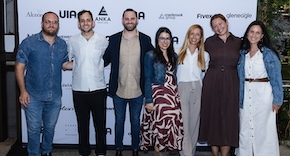
Marika’s friends and family gather to honour her memory (supplied)
“I had written about Bondi Beach being the Jews’ spiritual home in Sydney,” Visontay said. “They wanted to make a programme that was unlike everything else.”
Visontay explains that Jewish roots in the eastern suburbs stretch back well before the postwar influx. Central Synagogue relocated from Paddington and opened in Bondi Junction in the 1920s.
After the war, successive waves from Eastern Europe deepened the Bondi presence. Hungarian, Slovak, and Polish accents filled the streets around Wellington Street and Bondi Road. The Hakoah Club in Hall Street, Bondi, became an important centre of the community.
The Gelato Bar was also an important meeting point, and stores like Starks, Kemeny’s, Wellington Cake Shop, and Hadassa Butcher soon opened.
“We think of it traditionally as being a big influx after the war,” Visontay states, “but they had actually laid down roots before 1920.”
For many migrants, Bondi was not just convenient; it felt safer. It was close to synagogues, to kosher butchers, and to people who spoke the same language.
Visontay also recalls the week after the massacre, standing outside among a large, predominantly Jewish crowd at a public memorial.
“I was very moved by the fact that I was in a group of so many Jews in a public place,” he said. “We were in the majority, and I was actually surprised at how I was moved by that.”
That visibility, rarely experienced in Australia outside synagogue walls, is part of what “Bondi Spirit” captures.
Against that backdrop, Marika’s life feels inseparable from the suburb.
Born in Czechoslovakia, she grew up amid antisemitism. She later separated from her husband and came to Australia to join her brother, arriving with a young son in the early 1970s. She married again, found work, and built a life in Sydney’s east.
She ran Hungarian restaurants, including one near the Queen Victoria Building, and was known for formidable cooking. Mouth-watering Kugelhopf cakes appeared in every possible form.
In later years, she returned more visibly to Jewish communal life. She kept Friday nights with friends and volunteered with COA, delivering kosher meals across the eastern suburbs.
“She did not just deliver food,” Spring said. “She would go in, and she would clean their kitchen and make sure they got their medications.”
Spring said she had been told Marika delivered more than 12,000 meals. Within her friendship circle, she was the engine.
“She really was the boss of this group of women,” Spring said. “She was just full of life and always booking tickets and telling everyone where to go.”
If someone suggested staying home, she would not have it, insisting they come out with the group.
She and Agi had a special closeness.

Hakoah Club Bondi in the 1960s
“If you get Marika, you get Agi,” one relative says in the film. Her friends describe the two as inseparable. They dressed alike, travelled together, and moved as a pair.
On the day of the attack, it was Agi who lay besides her.
Spring said filming became part of the healing for the group of close friends.
“They all said it was really good for them to get together, especially to be filmed,” she said. “They had permission to talk.”
The programme is introduced by author Mia Freedman, whom Spring approached after seeing her at a memorial at Bondi Beach. Spring wanted someone who understood both public scrutiny and private grief.
“My whole mission for this story was for it to be healing,” Spring explains. “By March, we would all have seen everything and been saturated with everything; I just wanted a bit of healing and somehow a bit of positivity out of it, just to help people.”
In the end, “Bondi Spirit” is less about how Marika Pogany died than about how she lived: loud, organised, immaculately presented, fiercely loyal, endlessly cooking, and forever telling her friends where to be next.
It is about a suburb whose Jewish story did not begin with tragedy and will not end there.
The Compass special, ‘Bondi Spirit’, airs on ABC TV airs this Sunday 8 March at 6.30 pm on ABC TV and ABC iview.

I’m not a fan of ABC but I admit I’m intrigued as to how compassionately the ABC handles this documentary. Hopefully with the empathy it deserves. May we never forget those we lost and may their memories forever be a blessing.
I haven’t watched television for more than two years, but I’ll be making an exception to watch this programme.