

Daughter of Bondi terror attack victim brings Holocaust memory into the present

A Sydney International Holocaust Remembrance Day commemoration on Tuesday, 27 January, was marked by a powerful address from Professor Sabina Kleytman, whose father, Alex, a Holocaust survivor, was murdered in the Bondi Beach terror attack last December.

Leah Hechtman, Gabriella Mordecai, Allegra Spender, Rabbi George Moredecai, Rabbi Jacqueline Ninio, Governor General Sam Mostyn, Ilan Kidron, Pic: Giselle Haber
The annual International Holocaust Remembrance Day and Liberation from Auschwitz commemoration was hosted by the Sydney Jewish Museum in partnership with the Australian Association of Jewish Holocaust Survivors and Descendants and was held at Emanuel Synagogue’s Heritage Sanctuary in Woollahra. The event, attended by Holocaust survivors and their families, diplomats, as well as community leaders and members, marked the anniversary of the liberation of Auschwitz on 27 January 1945.
Observed worldwide, the day commemorates the six million Jews murdered in the Holocaust and the millions of other victims of Nazi persecution. Organisers said this year’s commemoration carried added urgency amid a sharp rise in antisemitism globally and in Australia.
The 2026 theme, “Bridging Generations”, took on particular resonance just weeks after the Bondi attack, which targeted the Jewish community during Chanukah celebrations. Speakers said the theme underscored that Holocaust remembrance does not end with survivors, but must be carried forward by their children, grandchildren and all who commit to preserving their stories.

Professor Sabina Kleytman with her son, Matthew (photo: Giselle Haber)
Dr George Foster opened the evening with a powerful address noting the direct line from Auschwitz to today’s antisemitism culminating in the atrocity at Bondi on 14 December 2025.
In her keynote address, Kleytman told the audience it was the first time she had spoken publicly about her father as a Holocaust survivor. She described his childhood escape from Nazi persecution, including a bombed evacuation train and years of hunger and fear during a forced journey to Siberia, experiences that left permanent physical and psychological scars.
After migrating to Australia in 1992, Alex Kleytman rebuilt his life, working as an engineer on major infrastructure projects, including Sydney Olympic Stadium. In retirement, he devoted himself to documenting antisemitism in the former Soviet Union, writing books to preserve Jewish history and record the stories of Jewish figures who had never been publicly recognised.
Kleytman drew a direct connection between the Holocaust and the Bondi Beach attack, telling the audience: “During the Holocaust, Jews were killed simply for being Jews. Exactly the same happened on the 14th of December.” She said the motive behind both acts of violence was identical, regardless of age, background or level of observance.
Kleytman warned that the trauma experienced by survivors of the Bondi attack, including children who saw parents and siblings killed, would have lasting consequences. “We keep talking about intergenerational trauma,” she said, “but this trauma is no longer intergenerational. It is real. It happened to them,” urging those with influence to consider the impact not only today, but five, ten and twenty years into the future.
Earlier in the evening, Australian Governor General Sam Mostyn addressed the gathering, describing Holocaust Remembrance Day as “a time of solemn remembrance, deep listening and vigilance”. She said the murder of a Holocaust survivor in the Bondi attack cast a new shadow over this year’s commemoration and reinforced the need for active remembrance, moral clarity and national responsibility.
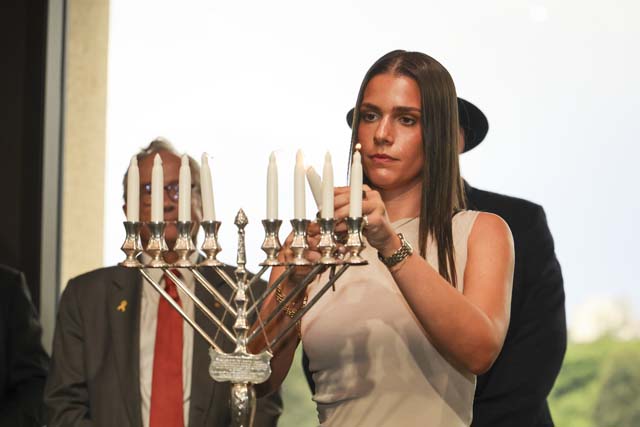
The formal program included memorial candle lighting, the recitation of Mourners’ Kaddish and “El Malei Rachamim” by Rabbi George Mordecai, in memory of the six million Jews murdered in the Holocaust, and a minute’s silence for the victims of the Bondi attack.
Holocaust survivors and descendants were seated at the centre of the gathering, with organisers emphasising the importance of living testimony in shaping understanding beyond textbooks or lectures.
The evening also featured a panel discussion titled “Holocaust remembrance today in the shadow of contemporary antisemitism”, with contributions from Professor Avril Alba, Associate Professor Jan Lanicek and third-generation leader Michelle Levitt, moderated by Sandy Hollis of the Sydney Jewish Museum.
The discussion explored how Holocaust education and remembrance are shaped by contemporary antisemitism and the responsibility carried by later generations.
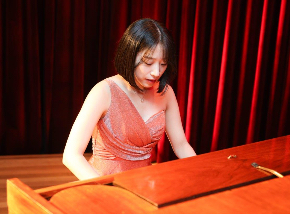
Artistic contributions formed a central part of the commemoration, including a powerful reading of the poem “Beginnings” by Miriam Hechtman. A Ladino song, “Arboles Lloran” (Trees Cry for Rain), that was recited by Jews as they were forced into the gas chambers, was performed by Rabbi George Mordecai. A musical performance by Ilan Kidron underscored the role of culture and memory in remembrance.
The commemoration concluded on a hopeful note with Rabbi Mordecai and his daughter, Gabriella, singing, “Olam Chesed Yibaneh” – The world is built with Love.”
The Executive Council of Australian Jewry stated, “The theme of this year’s International Holocaust Remembrance Day is Bridging the Generations – a reminder that remembrance is not just the responsibility of the survivors, it is incumbent on all of us to carry the lessons and legacy of the Shoah into the future.
Traditionally, this has meant sharing the testimony of those who endured the horrors of history’s darkest chapter.
But over the past two years, and the past two months in particular, we ourselves have experienced the escalation of antisemitism in an otherwise civilised country, the depths to which members of that society can sink, and the nonchalance of the authorities in the face of the willful destruction of Jewish property, the doxing of Jewish performers, businesses and academics, and the harassment of Jewish students.
Amid abuse and incitement, we have also experienced the searing pain of grief, as a joyous celebration of Jewish survival became a scene of senseless slaughter.
For the Jews of Australia, the phrase ‘Never Again’ has never been more poignant, and the demand on our country to remember so critical.”
Click here for a photo gallery from the event.

Whilst the description of this important and well received event is generally accurate, there is one addition. Dr George Foster opened the evening with a powerful address noting the direct line from Auschwitz to today’s antisemitism culminating in the atrocity at Bondi on 14 December 2025.