
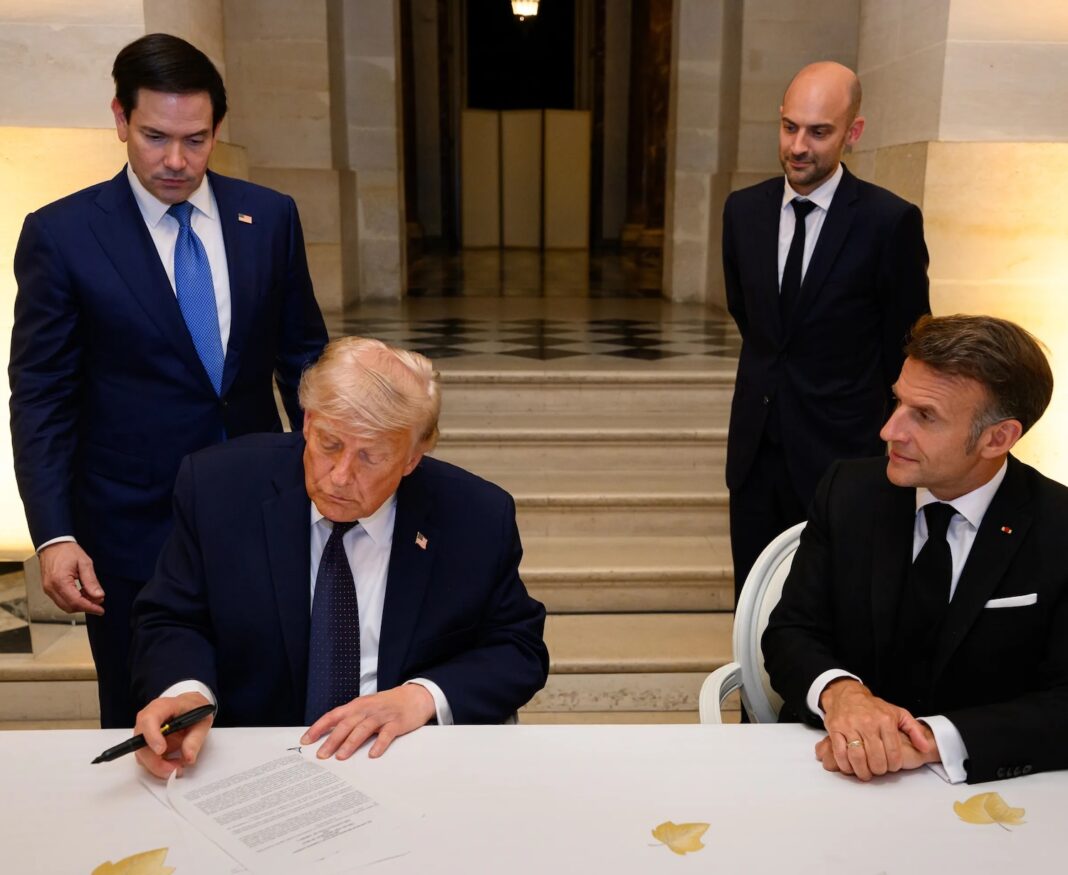
In assessing the situation, in light of the 14-point MOU between the US and Iran, everything revolves around how one views a single individual, President Trump.

Trump is considered either the Neville Chamberlain of our time or someone who was cleverly responding to domestic US political and economic pressure until the midterms would pass in November, then planning to return to deal more forcefully with the Iranian regime.
Unfortunately, what has ensued, because of some of the MOU points and by way of commentary from President Trump and Vice President Vance, are some irreversible changes that will be enduring, no matter what happens later in the year, whether the MOU actually survives or not.
Whilst militarily the US and Israel have never been closer, damage has been done at the diplomatic level to the relationship between Israel and the US and to the perception of the state and nature of the alliance. Both President Trump and Vice President Vance have not only omitted Israel from any inside track information or influence but have also attempted to, and at times succeeded in, humiliating both Prime Minister Netanyahu and Israel.
Although it is true that Trump says many things, some of his comments will linger and be highly damaging to Israel.
One major unfortunate example of this is to reinforce the ‘genocide’ narrative. Untrue, of course, and whilst he did not use the word itself, Trump said that “Israel has been fighting Hezbollah too long and too many people are being killed. You don’t have to knock down an apartment house every time you’re looking for somebody, because there are a lot of people in those apartment houses, and they’re not all Hezbollah, that I can tell you.” This will haunt Israel into the future and will also be superimposed over Israel’s image re Gaza.
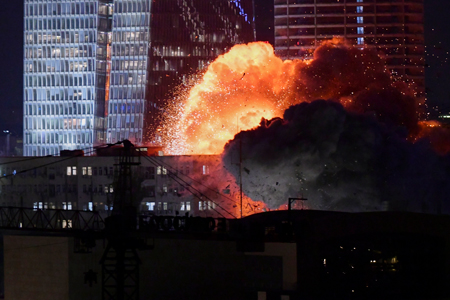
The Gulf and Arab states generally (not to mention Taiwan, Europe and Australia) have learnt an important lesson about the US’s behaviour and natural priority of self-interest. As have the Iranian people, who heard Trump’s famous promise that “help is on the way,” but for which they are still waiting.
The Arab states are being driven back to directly negotiate with Iran, when previously they had been prematurely cheering Iran’s demise as a threat. This is the result of having seen not only the US seemingly caving in, so far, to relatively mild economic pressure, but also that the Iranian regime has been strong enough to resist and survive the greatest military power in the world. Discovering in the process just how easily and successfully Iran can cause the West ongoing pain, simply by re-closing the Strait of Hormuz.
Initially, Israel’s strongest allies in the Republican Party, like Lindsey Graham and Fox personalities like Mark Levin and even US ambassador to Israel Mike Huckabee, were highly critical of the 14-point MOU.
What a difference a week makes. They have almost all been brought back into line by Trump and his people.
The current position, even of initially harsh critics, is that this is merely giving diplomacy a chance and that if unsuccessful, the US will return to bombing Iran back to a solution.
When you take into account that bombing would simply not be enough and would likely need American boots on the ground to do any better than it has done till now, it is fair to say that certainly at the moment, this seems like a hollow and unlikely threat.
One of the most damaging points in the MOU is to dial Iran directly and overtly into the situation in Lebanon, effectively giving Iran a veto over the Lebanese situation whilst removing both Lebanon and Israel from the main talks and reducing the negotiations between Lebanon and Israel to a side show. Lebanon needs to regain its territorial integrity and both Lebanon and Israel agree that the only way to do so is to remove Hezbollah, or at the very least, to disarm it.
In early June, Lebanese President Joseph Aoun urged Iran not to interfere in his country, also telling the Iranian proxy Hezbollah that diplomacy was the only solution to the conflict with Israel. “It’s not your country, it’s our country… It’s not your job to interfere into our country,” Aoun said in an interview with CNN, addressing Iran’s Revolutionary Guards. “They (Iran) are using Lebanon as a bargaining chip in their negotiation with the United States. It’s unacceptable.”
Across the spectrum in Israel, there is broad agreement that for Israel’s north to return to anything like normalcy, Hezbollah needs to be dealt with. Trump may insist on a ceasefire, but Hezbollah continues to test this, and then Iran cries foul and threatens to close the Strait whenever Israel retaliates.
With an election coming up or not, no Israeli political leader can agree to withdraw from southern Lebanon without dealing with the problem of Hezbollah.
On the question of the upcoming election in Israel, one of Netanyahu’s claimed advantages was his relationship with Trump. Undoubtedly, Trump has proven to be a good friend of Israel’s in the past, but if opinion polls are to be believed, Trump has gone from the highest possible approval rating in Israel, indeed much more popular even than any Israeli politician, to a new low water mark.
The polls also show that whilst Netanyahu did not get the bounce he would have initially been expecting prior to the ceasefire, he has not been dramatically hurt by recent events either.
On the three major fronts, Gaza, Lebanon and Iran, Israel’s enemies are rebuilding, protected by a Trump-imposed ceasefire that does not look like it will lead to the disarming of any of them.
Formal and informal alliances are emerging all over the Middle East. One to watch is that between Egypt, Saudi Arabia, Turkey and Pakistan.
This is a wakeup call for Israel. Essentially, Israel can only depend on itself to act in the Jewish state’s best and primary interests. The war that began on 28 February turns out to have been a more extensive version of mowing the grass, but not the one that will achieve decisive peace.
Israel is more realistic since October 7, the ‘conceptia’ has changed from assessing enemy intentions to preventing enemy capabilities. The need to grow its home arms production much further is clear. Strategic goals need to be better defined and require a whole-of-country construct.
Even now, there are opportunities. Yaacov Katz in the Jerusalem Post reminds us that after the JCPOA agreement was signed in 2015 during the Obama administration, in 2016 Obama signed the biggest arms deal between Israel and the US ever. That 10-year deal is about to expire, and perhaps in some form of making up with Israel, Trump will look more favourably on ensuring Israel keeps its qualitative military edge.
The Israeli people are divided on who can lead them into the next period. Whatever the election results, at the very least, we would hope to see a government coalition which is not hostage to every single one of its parties, unlike the current situation where any one party, if their demands are not met, can threaten to leave and bring the government down. On current polling this is unlikely to change in the short term.
However, on one matter the US administration is correct. Israel’s public diplomacy is so poor that there is no allegation too improbable, no conspiracy theory too outlandish, to be believed by vast numbers of people. Literally, millions of people.
Whoever wins the election, Israel needs to do better at public diplomacy, for both the good of Israel and Diaspora Jewry.
Notwithstanding the current mood, the Israeli people are strong. The younger generation, both inside and outside of Israel are resilient and proud. Together we will prevail.
Am Yisrael Chai
Dr Ron Weiser
World Co-Chair of the Jewish Agency (Sochnut) Task Force on Antisemitism