
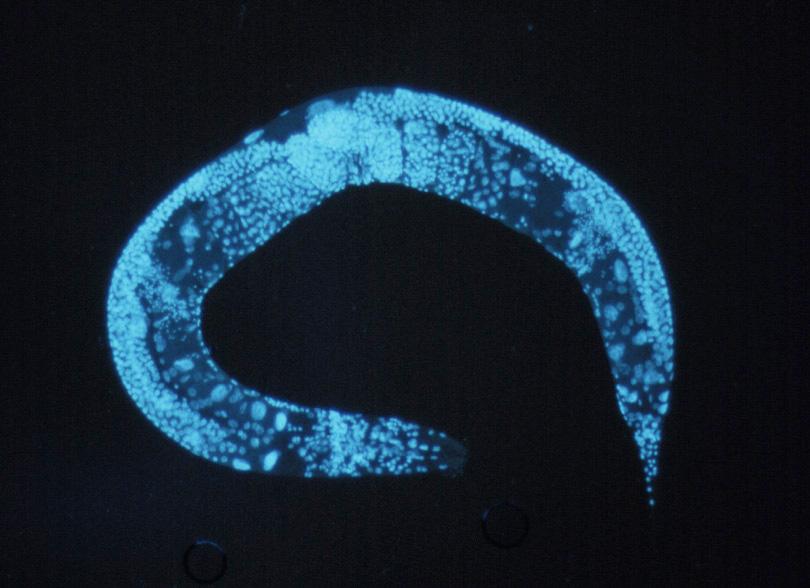
Can the experiences of parents affect their children and grandchildren, not simply through upbringing or family history, but through biological inheritance?
It is a question Professor Oded Rechavi of Tel Aviv University has spent years investigating. However, he has not been studying humans, but a microscopic worm known as C. elegans.
Speaking to JWire from Israel, the neurobiologist was quick to warn against applying the findings to people before there is firm evidence.
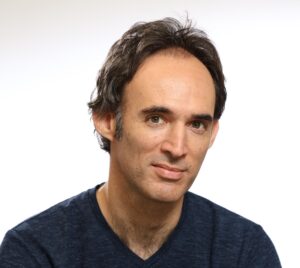
“We have to be very, very careful that we don’t extrapolate to humans because we don’t have proof yet,” he tells JWire.
Rechavi will discuss the science behind inherited memory during a one-night Sydney appearance on Wednesday, 1 July.
His talk, Beyond DNA: Can we inherit memories?, will examine epigenetics, evolution and whether information about an organism’s experiences can pass to later generations without altering its DNA sequence.
Epigenetics refers to changes in how genes behave that are caused by factors other than alterations to the DNA sequence itself. This means the same genetic code can produce different outcomes depending on what an organism experiences.
Rechavi’s laboratory has found that C. elegans can transmit certain responses through small RNA molecules, which help regulate whether particular genes are active.
Alongside the inheritance of DNA, this small-RNA process can allow some environmentally induced responses to affect several generations.
Rechavi explains that his research had examined inherited responses to conditions, including starvation, temperature and threats such as viruses.
The findings challenge the assumption that parents pass on DNA, but not any biological consequences of their experiences.
They also recall the work of French naturalist Jean-Baptiste Lamarck, who argued that characteristics acquired during an organism’s lifetime could be inherited. His theory was largely rejected as scientists came to understand natural selection and genetics.
Rechavi said his findings neither overturned Darwinian evolution nor confirmed Lamarck’s theory.
He said natural selection was a fact and that, although RNA inheritance showed that some parental responses could affect later generations, the process was not exactly what Lamarck had proposed.
Whether such inheritance can influence the speed or direction of evolution remains an open scientific question.
The research also raises a more personal issue: could trauma, famine or other severe experiences have biological effects on later human generations?
Asked whether the findings might help explain trauma such as that experienced among the children of Holocaust survivors, Rechavi said scientists did not yet know whether comparable mechanisms operated in humans.
Rechavi acknowledged that the title of his Sydney talk could be interpreted more broadly than the present evidence allows, joking to JWire that it was “clickbait”.
He said the presentation would explain what the worm research had established, what might apply to humans and what experiments would still be required.
Rechavi explains that the microscopic worm, C. elegans, has become one of biology’s most widely used model organisms because it is relatively simple, transparent and produces a new generation about every three days. They also can reproduce on their own, allowing researchers to study several generations without introducing genetic differences from another parent.
Researchers can observe activity within its nervous system, which contains 302 neurons and has been extensively mapped.
Those qualities allow scientists to study molecular and inherited changes over several generations in a relatively short period.
Rechavi’s research also covers how memories are retained and lost within a single generation.
In work published in Nature, his team found that cold exposure and lithium delayed the forgetting of learned smell associations in worms.
The worms normally forgot the association within two to three hours. Rechavi said cooling extended their memory by more than eightfold, while worms treated with lithium retained the association for at least five hours. Both effects involved the diacylglycerol pathway, which helps regulate activity within neurons.
The researchers linked delayed forgetting to changes in neuronal membrane properties and reduced signalling through the pathway. They also detected longer-lasting suppression of activity in downstream neurons.
The findings are significant because lithium has long been used to treat bipolar disorder, although the way it acts on the brain is not fully understood.
He stressed that the experiment did not show lithium could prevent memory loss in humans. However, it may provide researchers with another way to investigate the drug’s effects on memory and brain activity.
Rechavi’s scientific work has extended well beyond inheritance and memory.
He was also part of a team that extracted ancient DNA from the animal-skin parchment of the Dead Sea Scrolls, using genetic links between the skins to test which fragments may once have belonged to the same manuscript.
It was another example of his ability to use biology to recover information thought to have been lost, whether from ancient texts, neural circuits or generations of inherited change.
Professor Rechavi will speak at a Sydney event presented by Australian Friends of Tel Aviv University from 7.15pm to 8.45pm on Wednesday, 1 July, in the eastern suburbs. Click here to register.