Hebrew University launches pioneering academic centre for addiction and mental health

The Hebrew University of Jerusalem has launched the Israel Centre for Addiction and Mental Health (ICAMH), a landmark initiative established in response to the escalating mental-health and addiction crisis in Israel and around the world.
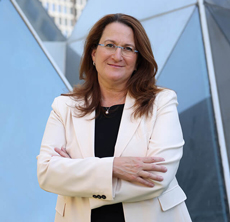
Danna Azriel1
Founded in collaboration with the Israel Centre on Addiction (ICA), the centre aims to become a leading hub for research, innovation and treatment in this critical field.
Danna, Naomi and Sharon Azrieli represented the Azrieli Foundation, whose financial contribution has helped to establish the centre.
Danna Azrieli, Chairwoman and Acting CEO of the Azrieli Group and co-Chair of the Azrieli Foundation Israel, said: “In the two difficult years since October 7, marked by war and its aftermath, trauma and post-traumatic stress have become a painful reality for so many in Israel. Our investment in ICAMH reflects our long-term commitment to strengthening and professionalizing the mental-health field, so that anyone affected by trauma can access professional, compassionate support”.
“One of ICAMH’s main priorities is to break down the barriers of stigma and shame that still surround mental health challenges in Israel,” added Dr Naomi Azrieli, Chair and CEO of the Azrieli Foundation. “Mental health is not something to be hidden in the shadows. We are proud to publicly champion this project, which will help to change those perceptions and allow more people to receive the help they need.”
“In the wake of October 7th we must recognize more than ever that trauma, addiction and suffering no longer remain on the margins—they reach into every family, every community, and demand a unified response,” said Prof. Tamir Sheafer, President of the Hebrew University. “The launch of ICAMH marks a crucial step toward integrating scientific excellence with clinical impact. This collaboration will help us develop innovative tools and strategies to confront one of the most pressing health challenges of our time.”
The ICAMH represents a unique collaboration between the Hebrew University, the Israel Centre on Addiction, the Hadassah Medical Centre, and health-maintenance organisations (HMOs). By uniting academic research, clinical expertise and healthcare-delivery systems, the centre establishes an integrated framework to meet the complex challenges of mental health and addiction.
The institute will support multidisciplinary research across neuroscience, medicine, psychology, data science, cognitive science, public health, education and social work. It will not only advance scientific knowledge but also provide evidence-based clinical services to individuals and families affected by addiction and mental-health challenges. Its mission is to drive innovative basic and applied research, promote evidence-based and personalised treatment methods, and train the next generation of researchers and clinicians who can transform care in Israel and contribute to global scientific progress.
The launch event, held last week at the Hebrew University, was attended by Prof. Tamir Sheafer; Mr Moshe Bar-Siman-Tov, Director General of the Ministry of Health; Prof. Yoram Weiss, Director General of Hadassah Medical Centre; Prof. Mario Mikulincer, Academic Director of ICAMH; Prof. Asher Cohen, Former President of the Hebrew University; Prof. Ariel Kor and Prof. Shauli Lev-Ran, Co-Founders of ICA, and Ms Inbal Dor Karbel, Director General of ICA.
“The establishment of ICAMH is not only an academic achievement; it is a moral imperative,” said Prof. Mario Mikulincer, Academic Director of ICAMH. “For too long mental health and addiction have been treated as private struggles rather than public priorities. ICAMH stands for a new paradigm—one that places mental health at the very centre of healthcare and views every person through their dignity and potential for healing, growth and thriving.”
The new centre reflects the Hebrew University’s commitment to bridging science and society, advancing mental health as a public priority, and ensuring that research translates into real-world impact for individuals, families and communities throughout Israel.