Nova survivor brings a human face to IRGC’s role in antisemitism

Iranian Jewish activist and Nova festival survivor Natalie Sanandaji has welcomed Australia’s decision to expel Iran’s ambassador and list the IRGC as a terrorist organisation.
She called it “a pleasant surprise” and “a huge step” that she hopes other countries will follow. Speaking to JWire in Sydney, Sanandaji said many people still fail to see the connection between the IRGC and the surge in antisemitism worldwide and that bold leadership helps Australians understand the real source of this hate.

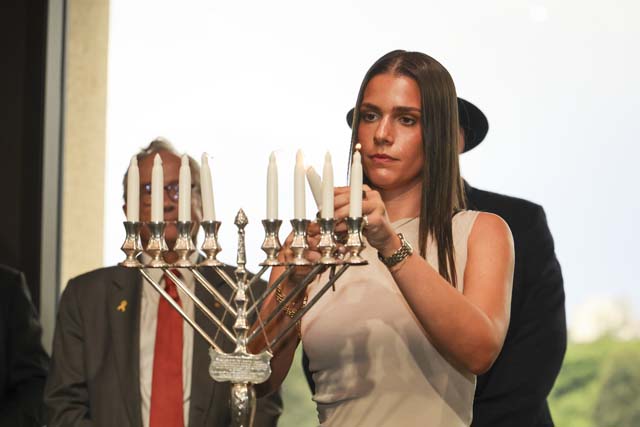
Natalie Sanandaji (supplied)
Sanandaji arrived in Australia on 26 August, the same day Prime Minister Anthony Albanese announced the government’s actions. The decision followed credible ASIO intelligence linking the IRGC to antisemitic arson attacks in Melbourne and Sydney.
She said she had been anxious about rising antisemitism before her trip but felt encouraged by the timing of the announcement. “For Australia to see that and recognise it gives me hope that people will start to educate themselves,” she said. “A lot of antisemitism comes from lack of knowledge. Education systems have failed many people.”
Sanandaji’s determination to confront ignorance was sharpened by an encounter last year in New York. On the anniversary of October 7, she spoke to people in Washington Square Park in New York, many of whom said the Hamas attacks were justified.
One young man proudly described himself as American yet also voiced support for Iran because it opposed Israel. Sanandaji told him she was an Iranian Jew and reminded him that in Iranian schools children are forced to chant “Death to America, Death to Israel” every morning. He admitted he had no idea this was the reality.
“That is when I realised how much education matters,” she said. The exchange helped inspire her to create the Iranian Coalition, an alliance of diaspora Iranians from Jewish, Muslim and Christian backgrounds dedicated to exposing the regime’s ideology and showing why many Iranians stand with Israel against a shared enemy.
Her advocacy is rooted in survival. Sanandaji was at the Nova music festival on 7 October. She and friends woke to rockets at dawn, fled for hours as gunmen advanced and made split-second life or death decisions.
At one point she faced the choice of hiding in a roadside ditch. She ran. She later learned that those who stayed were killed by Hamas terrorists. A local resident eventually picked her up in a truck and took her to safety.
“I felt I owed it to those who did not make it out to be their voice,” she said. Within days she began giving interviews, even while still in shock. Repeating her story became part of her healing and turned into a commitment to public speaking and education.
She has also challenged Tehran’s portrayal of Persian Jews as safe and content. “Those are propaganda videos,” she said. “Families are watched closely. People are forced to say they are safe. That is not the reality.” Most Iranian Jews left after the 1979 revolution, she noted, and those who remain must speak carefully, even when calling relatives abroad.
Sanandaji is in Australia not only speaking to Jewish audiences but also to non-Jewish ones. The National Council of Jewish Women Australia is organising boardrooms and salons with opinion leaders in Sydney and Melbourne to platform her story. She will also be a speaker at this week’s Mayors’ Conference on Antisemitism on the Gold Coast organised by the Combat Antisemitism Movement.
NCJWA national president Lynda Ben Menashe said Natalie’s story gives their message greater impact. “The human story is the most powerful connector. Her message amplifies the message that the National Council of Jewish Women Australia has, that this is an issue that touches us all.” She added that allies such as Iranian women, Yazidis, Middle Eastern Christians and Baha’is have been “literally celebrating” Australia’s action.
Both women warned against complacency. Sanandaji hopes Australia’s leadership against the IRGC will encourage other nations to follow. Ben Menashe urged vigilance against conspiracy theories and cautioned that homegrown hate remains a threat even when foreign actors are involved. She called for widespread media literacy education so all Australians can recognise disinformation.
For Sanandaji, the aim in Australia is clear. “I want people to hear a first-person story and look past slogans,” she said. “When people learn what the (Iranian) regime stands for, many change their minds.”