MinterEllison distances itself from Sydney Biennale as controversy deepens

Law firm MinterEllison has moved to distance itself from the Biennale of Sydney, asking for its logo to be removed from the festival’s list of partners and supporters following the opening night controversy involving American performer DJ Haram.
The move, first reported by The Australian Financial Review, follows a similar decision by PwC to withdraw sponsorship from the Biennale after earlier concerns about anti-Israel content linked to the event.

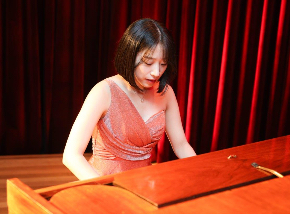
Audience gathered near the stage during a live DJ performance at the Biennale opening event (supplied)
MinterEllison said it “firmly and unconditionally” condemns antisemitism in all its forms, as pressure mounts on corporate partners associated with the publicly funded festival. The Biennale’s current partners page does not list the firm among its named partners.
The latest developments come after DJ Haram, whose real name is Zubeyda Muzeyyen, used her set at White Bay Power Station to deliver anti-Israel remarks and led chants including “from the river to the sea, Palestine will be free”, “long live the resistance” and “glory to all of our martyrs”. She also accused Australia of complicity in what she described as “ongoing genocide by Israel”.
The controversy has drawn strong criticism because of the level of taxpayer support for the festival. The Biennale receives about $1.6 million from the NSW government and a further $879,000 from the federal government.

NSW Jewish Board of Deputies president, David Ossip
NSW Jewish Board of Deputies president David Ossip described the fact that the rhetoric was aired on a publicly funded stage as “scandalous”, saying it had crossed a clear line. He said references during the performance to a “Zio-Australian-Epstein empire” were “pure antisemitism” and that celebrating “the resistance” amounted to support for terrorism.
NSW Minister for the Arts John Graham also condemned the incident, while the Biennale said the performer’s views were “entirely her own” and confirmed that a review is underway.
The controversy has also drawn attention to the Biennale’s curatorial leadership. The 2026 festival is led by Sheikha Hoor Al Qasimi, an Emirati ruler’s daughter and president and director of the Sharjah Art Foundation.
Her appointment had already attracted criticism from some Jewish community figures for her antizionist position and the prominence of artists in the program who have expressed anti-Israel views.
As reported in earlier coverage, concerns were raised that the exhibition included a significant number of artists aligned with pro-Palestinian activism or cultural boycott campaigns targeting Israel, while Israeli and Jewish perspectives were seen as largely absent.
Those concerns prompted the NSW Jewish Board of Deputies to decline an invitation to preview the exhibition ahead of its opening.
MinterEllison’s decision adds to growing pressure on the Biennale’s organisers and partners, and it is likely to intensify debates about the responsibilities of publicly funded cultural institutions and the boundaries between artistic expression and political advocacy.