Israeli mayor brings message of radical hope to Sydney

Michal Uziyahu has a phrase she returns to again and again: snap out of it.
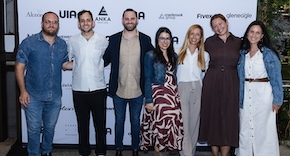
She first said it on the morning of October 7, holding her sons in a shelter as Hamas terrorists rampaged through her region. She said it again as friends’ names disappeared from emergency WhatsApp groups. And she said it last Sunday night to a room full of supporters at the United Israel Appeal (UIA) gala in Sydney.
“We have to survive,” she recalled telling her sons. “And you have a purpose to survive and to go and help.”

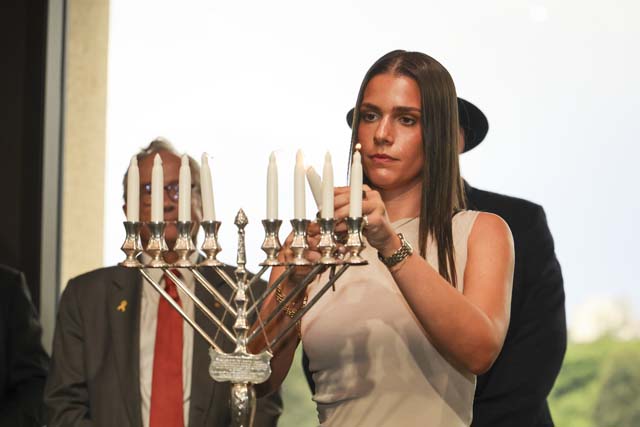
Michal Uziyahu, Mayor, Eshkol Regional Council (photo: Giselle Haber)
Uziyahu is the mayor of the Eshkol Regional Council, a farming region of 32 communities and about 35,000 residents on Israel’s border with Gaza, near the Egyptian frontier. She told the audience that 70 per cent of the October 7 massacre took place within her region.
Eshkol lost 259 community members that day, including babies, children and elderly people. A further 119 were taken hostage to Gaza. About half of those abducted on October 7 came from Eshkol, she said.
Yet Uziyahu refuses to let that day define her community.
“We will never be the same as we were before,” she said. “But we are determined to be better and stronger.”
Uziyahu is no stranger to UIA Australia. In the immediate aftermath of October 7, UIA provided urgent support to her devastated communities, enabling rehabilitation and community resilience programs on the ground, funding reinforced community centres and helping lay the foundations for long-term rebuilding.
She first visited Australia two years ago in the depths of the crisis.
“I don’t remember much,” she told JWire in an interview. “My heart was crushed. We still had dozens of hostages in Gaza. We had empty communities and destroyed homes.”

Michal on the site of a new resilience and community centre in Eshkol (photo: UIA)
This time, she returned with a different tone. The grief remains. The rebuilding is ongoing. But her message is one of what she calls “radical hope”.
“Radical hope means that you hold a very strong hope when you have no evidence to support it,” she told the gala audience. “You know that good things will happen. You don’t know exactly how. But looking around this room tonight, this is proof of my radical hope.”
Long before October 7, Eshkol lived under what she calls an “emergency routine”. For years, residents had 15 seconds to reach shelter when rockets were fired from Gaza.
“Even if I’m taking a shower and the kids are playing in the living room, 15 seconds,” she said. “And still, no victimhood. No self-bitterness. Choosing life.”
Instead of building trauma centres, the council built resilience centres. The distinction was deliberate.
“We won’t define ourselves through trauma,” she said. “We define ourselves through hope, through resiliency. When you work on your resiliency and trauma comes, you are resilient enough to deal with it.”
After October 7, those centres were overwhelmed. The number of therapists rose from 24 to more than 400, delivering over 3,000 hours of therapy each month. There are now 102 orphans under the age of 18 in Eshkol, 11 of whom lost both parents. The region has recorded a 90 per cent rise in children with special needs, 57 of them due to emotional trauma.
“There are no shortcuts,” she told the Sydney audience. “The difficulties are great. We are not hiding them. We are taking care of them.”
She is direct about the psychology of recovery.
“The moment you feel a victim, you are weak, you are helpless. A terrible thing happened to you. But you are not a victim.”
She recounted a resident who refused to return to her kibbutz after evacuation.
“She said, ‘How dare you tell me to come back?’ I told her, if you don’t feel safe, don’t come back. But make a decision.”
The woman eventually returned. She now heads the emergency team in her kibbutz.
“Being resilient is being active,” Uziyahu said. “It is doing for others.”
In her speech, Uziyahu described raising her children in a place where rockets were part of normal life.

Michal Uziyahu speaking at UIA
“Life is 99 per cent heaven and 1 per cent hell,” she said. “We focus on the 99 per cent of heaven. When the 1 per cent comes, we remember where the focus is.”
On October 7, that 1 per cent exploded.
Hidden in the shelter, she watched as friends were murdered. A fellow mayoral candidate was killed with her husband and three toddlers. A childhood friend died defending his kibbutz. Her stepbrother was killed fighting at Nahal Oz and taken to Gaza.
“I know more than 100 people who were murdered in the most terrible way you can imagine,” she said. “But this connection between us, this is also our strength.”
More than two years on, recovery in Eshkol is uneven but tangible. Twenty-eight of its 32 communities have returned, with more than 93 per cent of residents back. Around 800 young adults from across Israel have relocated to the region, many through pre-army and national service programs.
“I tell young adults who ask me what I can offer them: blood, tears and sweat,” she said. “And an opportunity to write history.”
In Kibbutz Be’eri, 120 homes are under construction. In Moshav Mivtachim, 92 new houses are being built. New families are arriving even as some residents continue to struggle.
The Eshkol Resilience and Community Centre in Tzohar is a UIA project which will transform a neglected former school complex, once Uziyahu’s own primary and high school, into a community arts and therapy centre. It is designed to strengthen communal bonds and provide therapeutic support through creative programs.
“It used to be such a vivid place,” she said. “When Hamas took control of Gaza, we could not operate it anymore. It became empty. Now we are reviving it.”
She returned to Australia to share firsthand how UIA’s support helped her region begin to heal and why that same commitment is needed as Israel enters a long-term rebuilding phase.
“The rebuilding is not a moment,” she said. “It is a long journey.”
Uziyahu also drew a direct connection between October 7 and the Bondi Beach terror attack in December last year.
“When Sydney was hurting, it was our hurt too and our turn to stand with you,” she told the gala. “We are far away in distance, but we are not far away in heart. Because we are one people.”
She closed her speech with a story about Rabbi Akiva.
Akiva once entered the orchard with three other sages. Each of the others could not withstand what they saw. One lost his mind. One died. Each responded differently to the overwhelming vision. Rabbi Akiva endured.
Later, before he was executed, his wife asked him what he had seen in that orchard that was so terrible. He told her he had seen the future of the Jewish people. He had seen suffering. He had seen death. He had seen babies, women, men and elderly people killed. He had seen centuries of pain.
He also saw smoke rising.
Akiva’s wife responded that smoke is a good sign. Smoke means there are still people there. Smoke means life. It means the Jewish people are still present.
Uziyahu paused, then delivered the line that became her refrain.
“So, yalla. Snap out of it. We need you. And together, we will continue to write our story. An amazing story of radical hope.”
For more information on UIA’s projects, see: https://uiaaustralia.org.au/