

Chabad rabbis from Australia and New Zealand gather in Bondi after terror attack

More than 80 Chabad rabbis from across Australia and New Zealand gathered in Bondi this week for a major regional leadership conference marked by mourning, spiritual resolve and a renewed commitment to rebuilding Jewish life after the devastating Bondi Beach terror attack.
Held at Chabad of Bondi on February 17 and 18, the Regional Kinus Hashluchim (conference of emissaries) brought together rabbis serving Jewish communities across both countries, just two months after the December 14 massacre that claimed 15 lives, including Rabbis Eli Schlanger and Rabbi Yaakov Levitan of Bondi.

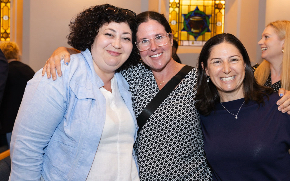
Chabad rabbis from Australia and New Zealand gather at Chabad of Bondi (photo: @d-mo)
Rabbi Schlanger had been part of the organising committee prior to his murder, and his absence was deeply felt throughout the gathering. In its official welcome message, organisers acknowledged that the loss of the two rabbis had left “an immeasurable void within the global Shluchim family,” underscoring the personal and communal impact of the tragedy.
The conference opened with a formal welcome by Rabbi Yehoram Ulman, followed by an address from Rabbi Pinchus Feldman, head shliach to New South Wales, who framed the gathering as both an act of remembrance and a call to action. Participants were tasked with developing Hachlatos, concrete initiatives aimed at strengthening Jewish life and expanding their work in the face of communal trauma.
Over two days, emissaries participated in leadership forums and strategic exchanges addressing the realities of guiding communities through crisis. A roundtable Shlichus exchange allowed rabbis to share frontline experiences, from supporting traumatised congregants to sustaining Jewish engagement during periods of fear and uncertainty.
Also joining the conference was Rabbi Mendy Kotlarksy from Chabad-Lubavitch headquarters in New York, who flew in especially to address and support the local shluchim.
A dedicated session addressed the responsibilities of rabbis in the aftermath of tragedy, held in memory of Rabbi Schlanger. The discussion explored the spiritual and leadership challenges faced by rabbis supporting communities through grief while confronting their own loss.

Chabad rabbis visit the site of the Bondi Beach terror attack. (Video by Rabbi Shalom White)
On Tuesday evening, the rabbis gathered at Bondi Beach, returning to the site of the December 14 massacre where their colleagues and community members were killed. There, standing at the scene of the attack, they recited Tehillim, psalms, in memory of the victims and sang in a moment of collective mourning and reflection.
Reflecting on the visit in a Facebook post, Rabbi Shalom White of Perth described the profound emotional impact of standing with fellow emissaries at the site.
“As rabbis, we are accustomed to being asked questions. There is an unspoken assumption that ‘the Rabbi’ must have the answer,” he wrote. “Yet every question holds more than one possible response, and the wisdom of a rabbi lies not only in choosing which answer to give but sometimes in knowing whether to answer at all.

Rabbis gather in Archer Park, the site of the Bondi terror attack to pray and sing (photo: @d-mo)
“Some questions are not spoken by people, but by moments. By events. By circumstances that confront us without words. And sometimes we do not even know what the question is, only that something within us is asking.
“On the first night of Chanukah at Bondi Beach, the Jewish community was confronted by a deeply painful and searching question. I am not sure I can yet define what that question was. But today, I experienced something of the answer.
“Today I stood together with the Chabad shluchim from across Australia at Bondi Beach. We did not speak. There were no speeches, no explanations. We simply stood together, sang together, and held one another.
“And I left with the quiet certainty that even when the question remains beyond words, the answer can already be unfolding.”



Such a profoundly beautiful observation by Rabbi Shalom White of Perth on questions and answers, with an answer perhaps unfolding but not yet found to a question that remains beyond words. No doubt he is a blessing to his synagogue and congregation.